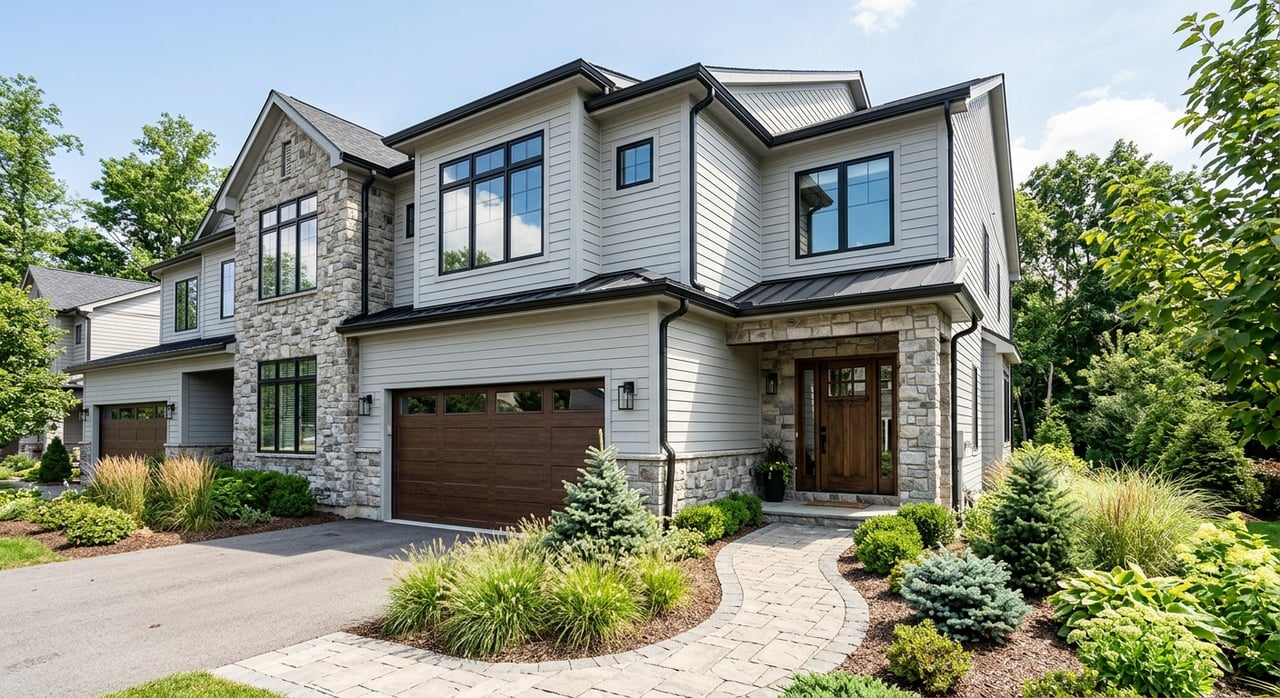
If you want less yard work, fewer exterior chores, and a home that better fits your next chapter, Minnetonka gives you more than one path. Low-maintenance living here is not one-size-fits-all, and that matters whether you are buying your first townhome, downsizing, or planning a future resale. This guide will help you understand how townhomes and villas fit into the Minnetonka market, what “low-maintenance” really means, and what to watch before you make a move. Let’s dive in.
Why low-maintenance living fits Minnetonka
Minnetonka is still shaped mostly by low-density housing, but attached homes have a clear place in the local market. According to the city’s climate planning, townhomes make up about 10% of housing units, while single-family detached homes account for 54% and multifamily housing 35%. More than two-thirds of households are owner-occupied, which helps explain why for-sale townhome and villa options remain relevant for buyers who want ownership with fewer day-to-day tasks.
The city also shows direct support for this housing type. Minnetonka’s homebuyer assistance program includes townhomes and condominiums, and the city’s homeowner financing page says low-interest home improvement financing may be available for townhomes and condos, subject to association bylaws. For buyers comparing housing options, that is useful local context.
Townhomes and villas are not all the same
One of the biggest misconceptions about low-maintenance living is that every home looks and lives the same way. In Minnetonka, planning documents show a wider range of products, from compact attached homes to larger detached villa-style properties. That means you can often find different layouts, privacy levels, and maintenance structures within the same broad category.
The city has used villa language to describe low-density attached or detached homes. In one housing assessment, Legacy Oaks included detached townhome villas, twin homes, and condos, with the villas described as single-level homes with walk-out basements. Another city assessment described The Villas at Groveland as for-sale detached villas and single-family homes in an association-maintained community.
For you as a buyer or seller, the takeaway is simple: low-maintenance does not automatically mean small, attached on both sides, or all on one level. Some homes offer main-level living, some include walk-out lower levels, and some feel more like a detached single-family home with shared management built in.
What “low-maintenance” really means
Low-maintenance living sounds straightforward, but in practice it depends on the association documents. Under Minnesota’s common-interest-community law, the association is generally responsible for maintaining, repairing, and replacing common elements unless the declaration says otherwise. The board must also prepare a preventive maintenance plan, maintenance schedule, and maintenance budget for those common elements.
That same legal framework requires annual reporting that includes replacement reserves and capital expenditure information. In plain terms, two communities may both be called low-maintenance, but what they actually cover can be very different. One association may handle more exterior items, while another may leave more responsibility to individual owners.
Documents buyers should review closely
If you are shopping for a townhome or villa in Minnetonka, the association paperwork deserves as much attention as the floor plan. Before you commit, you should understand what the monthly dues cover and how the community plans for future repairs. This is often where a good value can look better or worse.
Focus on these key items:
- Declaration
- Bylaws
- Annual report
- Reserve information
- Maintenance plan and schedule
- Budget details for common elements
These documents can help you answer practical questions. Are major exterior components funded well? Has the association planned for long-term replacement needs? Are there signs that deferred maintenance could become a shared cost later?
Why reserves and maintenance history matter
In resale, association health can matter just as much as location and layout. Minnetonka’s Housing Improvement Area program highlights why. The city says the program is designed to help aging common interest communities, including condos and townhomes, address deferred maintenance.
City materials show this type of work can include roofs, elevators, boilers, HVAC, decks, and other major shared-cost items. That does not mean every older community has a problem. It does mean you should take reserve strength, maintenance history, and upcoming capital projects seriously when comparing options.
Where townhomes and villas tend to cluster
Minnetonka is mostly zoned for low-density residential use, so townhomes and villas are not spread evenly across the city. Instead, they tend to appear in pockets, redevelopment areas, and corridor-oriented developments. If you are searching for this lifestyle, it helps to know where inventory is more likely to show up.
The Glen Lake area is one of the clearest examples in city redevelopment materials. The city has referenced sites between existing condominiums and townhouses there, and neighborhood study materials explored villas and townhomes along Eden Prairie Road and in concepts near Excelsior Boulevard and Glendale Street. That makes Glen Lake a useful area to watch if you want a mix of housing forms in an established part of Minnetonka.
The city’s rental locator also points to several corridors where low-maintenance-oriented communities appear, including Cedar Hills, Shady Oak, Bren Road, Carlson Parkway, Ridgedale, Wayzata Boulevard, and Minnetonka Mills. Examples listed in city materials include Cedar Hills Townhomes, Cedar Pointe Townhomes, Zvago at Glen Lake, and Amira Villas. For buyers, that pattern suggests attached and villa-style homes are often found near major roads and redevelopment nodes rather than in every neighborhood pocket.
What buyers should weigh before choosing one
A townhome or villa can be a strong fit if you want ownership with fewer exterior tasks, but the right choice depends on your priorities. Some buyers want a simpler lifestyle now. Others want main-level living, easier travel, or a home that feels more manageable than a larger detached property.
As you compare options, think about more than finishes and square footage. Consider how much privacy you want, whether you prefer attached or detached construction, how important single-level living is, and what the association actually maintains. The answer is rarely just about dues. It is about how the home supports your day-to-day life.
A few smart comparison points include:
- Attached versus detached design
- Main-level living versus multi-level layout
- Walk-out basement potential
- Monthly dues and what they include
- Reserve funding and maintenance history
- Rules that may affect exterior changes or rentals
If you are considering a future rental, one local detail matters. Minnetonka requires rental registration for townhomes, and the city says each unit in a townhome or condominium complex must be identified individually when registered. That is worth knowing early if flexibility is part of your long-term plan.
What sellers should know about resale
For sellers, the good news is that this segment remains meaningful in Minnetonka. The city reported that residential properties increased in value in 2025 across townhouses, condominiums, apartments, and single-family homes. That does not guarantee a specific result for any one home, but it is a positive local signal for owners thinking about timing and positioning.
When your home is part of an association, buyers usually look beyond the unit itself. They want to know how the community has been maintained, whether major projects are already complete, and how stable the dues and reserves appear. A well-prepared seller can make this easier by having key association information organized early.
If you are preparing to sell, it helps to gather:
- Recent association documents
- Current dues information
- Reserve or annual report details
- Notes on completed exterior improvements
- Any upcoming capital project information
This kind of preparation can reduce surprises and help buyers feel more confident. In a townhome or villa sale, confidence often comes from clarity.
Why local guidance matters in Minnetonka
Because Minnetonka’s townhome and villa inventory tends to appear in specific pockets, broad assumptions do not go very far. Product type, association setup, age of the community, and location within the city can all shape value and buyer demand. A detached villa in an association-maintained setting may attract a different buyer than a more compact attached townhome near a major corridor.
That is why local guidance matters. When you understand the community documents, the setting, and the likely buyer pool, you can make better decisions whether you are buying for convenience or selling for top value.
If you are thinking about buying or selling a townhome or villa in Minnetonka, the Greg Winegarden Group can help you evaluate your options with practical local insight and a clear plan.
FAQs
What types of low-maintenance homes are available in Minnetonka?
- Minnetonka includes a mix of townhomes, condominiums, twin homes, and villa-style properties, with some communities offering single-level living, detached designs, or walk-out basements.
What does low-maintenance living mean for Minnetonka townhomes and villas?
- It usually means an association handles some shared maintenance, but the exact responsibilities depend on the declaration, bylaws, budget, maintenance plan, and reserve information for that community.
Where are townhomes and villas commonly found in Minnetonka?
- City materials suggest these homes often cluster in areas like Glen Lake and along corridors such as Cedar Hills, Shady Oak, Bren Road, Carlson Parkway, Ridgedale, Wayzata Boulevard, and Minnetonka Mills.
What should buyers review before purchasing a Minnetonka townhome?
- You should review the association declaration, bylaws, annual report, reserve information, maintenance schedule, and budget to understand costs, responsibilities, and future capital needs.
How does association health affect resale in Minnetonka?
- Reserve strength, maintenance history, and major project planning can strongly influence buyer confidence because shared repairs like roofs, decks, HVAC, and other exterior items may affect future costs.
Are Minnetonka townhomes allowed to be rented?
- Minnetonka requires rental registration for townhomes, and each unit in a townhome or condominium complex must be identified individually when registered.